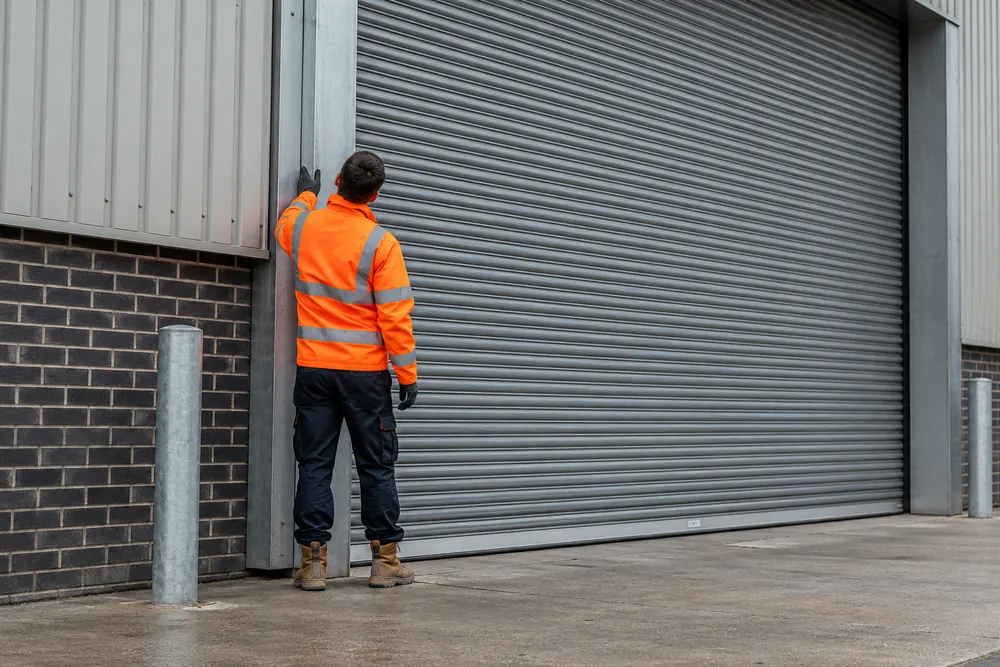
When A Shutter Needs Attention
A roller shutter should travel evenly, sit square in its guides and stop at its intended limits. Scraping, uneven movement, repeated cut-outs or a curtain that drops differently on one side call for investigation. A damaged bottom rail or an unreliable safety edge also needs attention even when the shutter still moves.
Stop using a door that has been struck by a vehicle, has loose fixings or has partly left its guides. Keep people and traffic away from the opening and follow the site isolation procedure. Repeatedly pressing the controls, pulling on the curtain or bypassing a safety device can turn a repairable fault into a dangerous failure.
What The Repair Covers
The first task is to separate mechanical damage from electrical or control faults. Checks may cover curtain slats, end locks, guide channels, the barrel, bearings, drive arrangement, motor, limits and external controls. The inspection also considers the supporting structure and whether an impact has moved the guides out of alignment.
A motor that appears to have failed may be stopping because the door is binding or a safety circuit is open. Replacing the motor without addressing the load can leave the original problem in place. We scope compatible replacement parts and any further work needed to return the complete assembly to safe operation.
For a damaged commercial security shutter, repair depends on the availability and condition of matching slats and the remaining curtain. Local damage may be repairable, while widespread corrosion or an obsolete drive may make replacement more practical. Our commercial roller shutter installation page explains the checks needed before choosing a new door.
Safety Duties For Commercial Doors
Powered shutters used at work fall within the Provision and Use of Work Equipment Regulations 1998, known as PUWER. Employers need suitable maintenance and inspection arrangements. The Workplace (Health, Safety and Welfare) Regulations 1992 also address safe doors and gates, including protection against trapping and falling.
BS EN 12453 addresses safety in use of power operated doors. A repair should consider the installed system, its operating mode and the people exposed to it. Restoring movement alone does not establish that the door is safe, and a door may need to remain isolated until defects are resolved.
From Fault Report To Handover
Start with the site postcode, the door type and a description of what happened. A photograph of the whole opening and a readable manufacturer plate, taken from a safe position, can help identify the equipment. Explain whether the door is open, closed or stuck between positions, and whether another route is available.
The work then moves through inspection, an agreed repair scope, parts identification and controlled repair. Relevant operational and safety checks follow before the door is released for use. Ask for a written record of the fault, parts fitted, checks completed and any outstanding restrictions, so the maintenance history remains useful.
- Report the symptoms and whether the opening is usable.
- Inspect the curtain, guides, drive and controls.
- Agree compatible parts and the complete repair scope.
- Complete relevant safety checks and record the outcome.
What Affects The Repair Cost
The cost of roller shutter repair depends on the damaged components, door size, access height and the availability of parts. A bent guide attached to damaged masonry involves a different scope from replacing a compatible control switch. Electrical supply faults or structural repairs may require other trades and should be identified in the quotation.
Site arrangements matter too. Access equipment, traffic segregation, permit requirements and work outside normal operating hours can change the job. A useful quote separates attendance, diagnosis, materials, labour and any follow-up visit, and states whether VAT is included. No reliable fixed price can be given from a symptom alone.