Specify For The Traffic And Environment
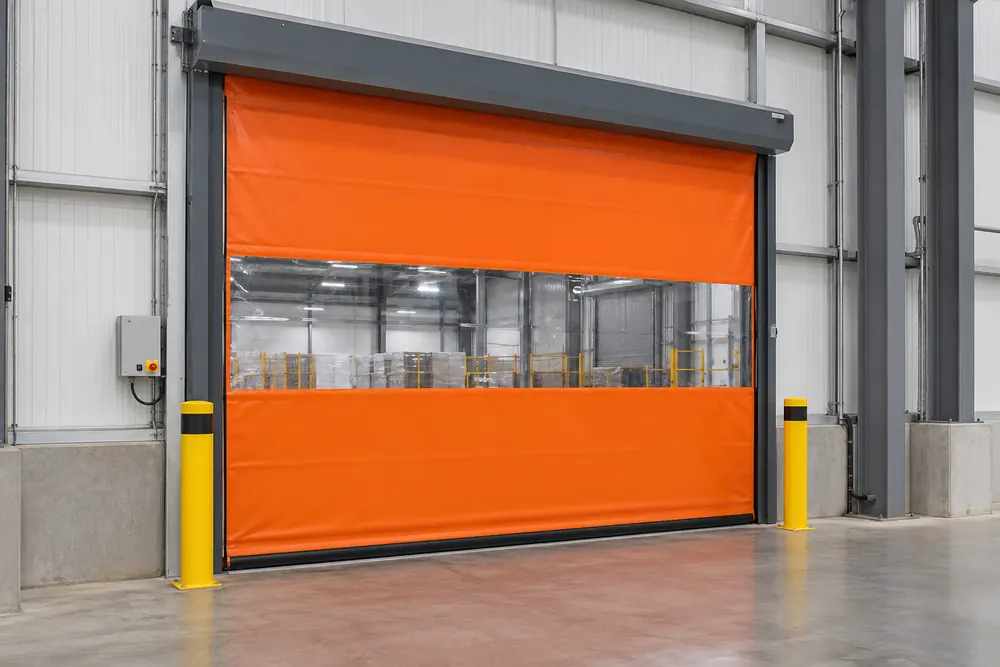
A flexible high speed door can separate workshop, storage or production areas while allowing regular passage. Its suitability depends on opening frequency, vehicle routes, visibility and the conditions on each side. Door speed matters, but it is only one part of a specification that also needs safe detection and suitable controls.
Internal and external applications expose the curtain and guides to different loads. Wind, pressure differences, washdown routines and temperature changes can influence material and sealing choices. A standard rapid roll door should not be assumed suitable for a cold store, hygiene-controlled space or external opening without checking its declared application.
Faults That Need Proper Diagnosis
A rapid roll door that repeatedly stops, reverses or leaves its guides may have curtain damage, a detection issue or a mechanical fault. Controller messages can help diagnosis, but the fault code needs to be interpreted alongside the equipment instructions and the actual door behaviour. Repeated resets can hide a recurring problem.
Report impact damage, torn vision panels, distorted bottom edges or damaged detection components. Keep the route segregated where the door may move unexpectedly or visibility is reduced. Do not bypass a light curtain, safety edge or interlock to maintain traffic flow while a fault remains unresolved.
Some models have a curtain designed to reinsert after a minor impact. That feature does not mean every collision is harmless or that a damaged door can be reset without inspection. Compatibility of curtain sections, guides and controls is specific to the product and needs checking before parts are ordered.
Powered Door Safety In A Busy Opening
PUWER applies to high speed doors used as work equipment and supports a suitable programme of maintenance and inspection. BS EN 12453 addresses safety in use of powered doors. The Workplace (Health, Safety and Welfare) Regulations 1992 are also relevant to safe doors, gates and traffic routes at commercial premises.
A risk assessment needs to consider pedestrians, forklift traffic, blind approaches and the chosen activation method. Radar, induction loops, pull cords and access controls have different functions and are not interchangeable with protective devices. Safety needs to be assessed for the complete installed system and its foreseeable use.
From Site Information To Commissioning
Begin with the manufacturer, model, site postcode and any visible fault message. Describe the traffic using the opening and what happens when the door fails. Photographs taken safely from ground level can help identify the curtain type, control panel and surrounding layout before a site assessment.
The inspection then checks curtain and guide condition, drive components, controls, limits and protective devices as appropriate to the model. Findings should separate the immediate repair from any recommended change to the activation or protection arrangement. An agreed scope makes the parts, access arrangements and remaining restrictions clear.
After repair or installation, relevant operating and safety checks should be recorded before handover. Staff need the correct instructions for normal use, fault reporting and any permitted recovery procedure. If another security door shares the opening, its interlocks and working sequence need consideration too.
- Identify the model, fault code and traffic pattern.
- Inspect the curtain, drive, guides and detection.
- Agree compatible parts and the work window.
- Check operation and record user instructions.
What Affects Cost And Long-Term Use
Door size, curtain construction, control type, activation equipment and environmental specification influence installation cost. Repairs depend on parts availability, software or controller requirements and the extent of impact damage. Access equipment, traffic separation and planned work windows can also change the scope.
Ask how seals, curtain wear and detection performance will be checked throughout the door life. A planned maintenance arrangement should follow manufacturer instructions and actual use, with fault records available to the next engineer. Where security or insulation is the main requirement, compare commercial roller shutters and sectional doors before deciding which arrangement best fits the site.